

First-Time Umrah: A Step-by-Step Guide to the Rites
Performing Umrah for the first time is deeply moving, and it is far less daunting once you understand the sequence. This step-by-step guide walks you through the four essential parts (ihram, tawaf, sa'i, and cutting the hair) in plain, respectful language so you can arrive ready to worship. For rulings specific to your situation, always consult a knowledgeable scholar.
Key takeaways
- Umrah has four essential parts: entering ihram, tawaf, sa'i, and halq or taqsir.
- Learn the sequence and the talbiyah before you travel, so you can spend your energy on worship rather than on logistics. And if you do slip up, mistakes are common and usually easy to fix. Ask.
- Pointing to the Black Stone from a distance is fully valid. Never push or harm anyone to reach it.
- Most US pilgrims travel on to Madinah afterward, where the Rawdah visit now requires a Nusuk permit booked in advance.
Before You Begin: Intention and Preparation
Umrah has four essential parts: entering ihram, performing tawaf, completing sa'i, and shaving or trimming the hair. Before you leave home, learn that sequence, memorize the talbiyah and a few key duas, and make a sincere intention (niyyah) to perform Umrah for the sake of Allah alone.
Arriving with the rites already understood is what lets you worship rather than watch the person in front of you and copy. Many pilgrims read through the steps a few times in the weeks before travel and keep a short summary saved on their phone, printed as well if they can, purely for reassurance in the moment.
Step 1: Entering Ihram
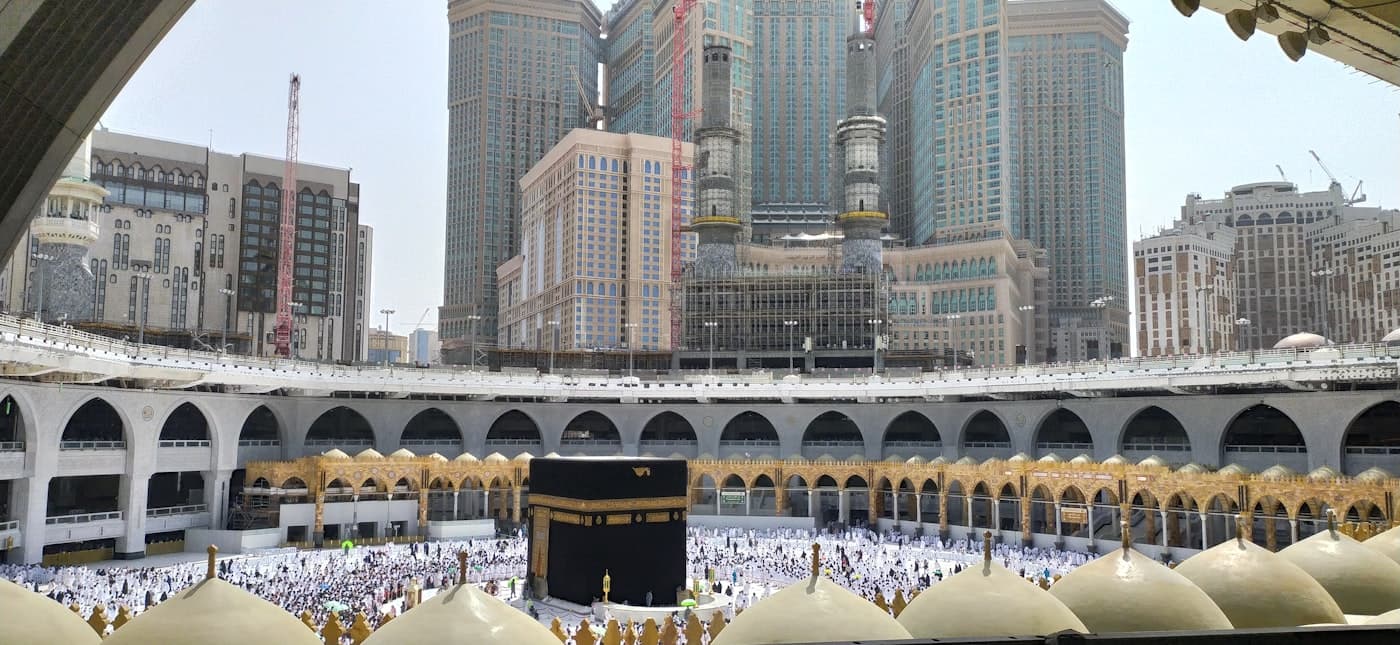
You enter the state of ihram at or before the designated boundary, the miqat. Pilgrims flying into Jeddah or Madinah often enter ihram before landing, or at the airport, so know your route in advance rather than working it out in the air. Men wear two unstitched white cloths and leave the head uncovered. Women wear ordinary modest clothing, without covering the face or hands.
After ghusl and prayer you declare your intention for Umrah and begin reciting the talbiyah: Labbayk Allahumma labbayk. From this point the ihram restrictions apply. No cutting hair or nails, no perfume, no marital relations, and no arguing or harming living things.
- Men: two unstitched white cloths, head uncovered.
- Women: ordinary modest clothing, face and hands uncovered.
- Ghusl, then prayer, then your intention, then the talbiyah.
- From that moment the restrictions apply: no cutting hair or nails, no perfume, no marital relations, no arguing or harming living things.
Important
If you are flying into Jeddah or Madinah, your miqat may be crossed in the air. Confirm with your group when to enter ihram. Many pilgrims change into ihram at their US departure or during the layover to avoid a rushed change on the plane.
Step 2: Tawaf Around the Kaaba
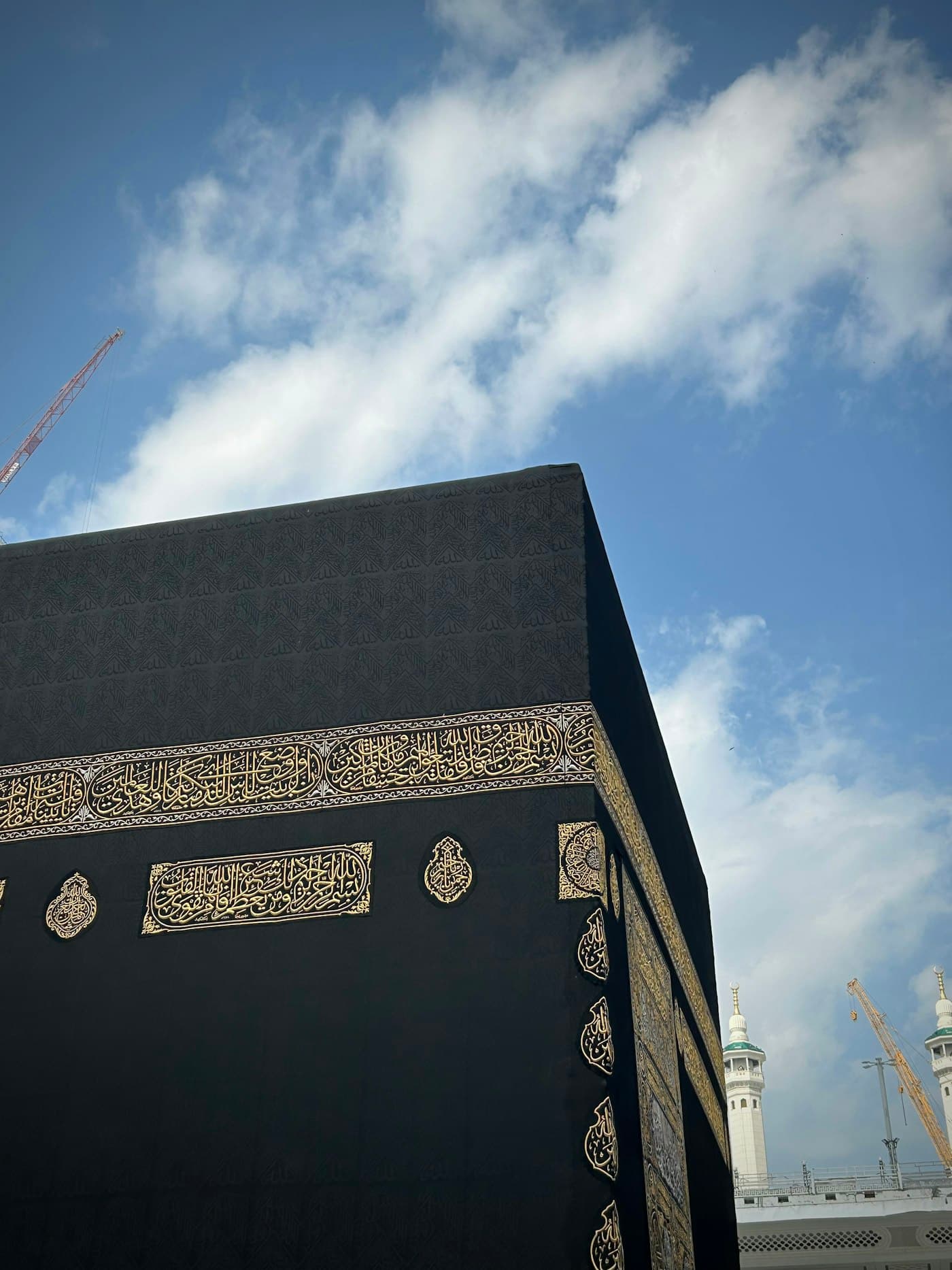
Upon reaching Masjid al-Haram, you perform tawaf: seven counterclockwise circuits around the Kaaba, beginning and ending at the Black Stone (Hajar al-Aswad). Point toward the stone and say Bismillah, Allahu Akbar at the start of each circuit. Do not push or harm anyone in an effort to touch or kiss it. Pointing from a distance is fully valid, and always has been.
Men perform a light jog (raml) in the first three circuits when able. Keep making dua throughout. There is no single required supplication, so speak to Allah in your own words, in whatever language they come in. And if the crowd on the ground floor is heavy, the upper levels of the Haram offer a calmer place to complete your circuits.
Step 3: Prayer at Maqam Ibrahim and Zamzam
After completing tawaf, pray two rak'ah behind Maqam Ibrahim if you can reach it, or anywhere in the mosque if the area is crowded. Then drink Zamzam water freely. It is a sunnah to drink your fill and make dua while you do, and in the expanded Haram the dispensers stand throughout the mosque, so there is no need to crowd any one spot to reach them. Take your time here. This is a moment many pilgrims later describe as the most peaceful of the entire journey.
Step 4: Sa'i Between Safa and Marwah
Proceed to the mas'a (the walkway) to perform sa'i: walking seven times between the hills of Safa and Marwah, commemorating Hajar's search for water for her son Isma'il. Begin at Safa and end at Marwah; one length counts as one, so Safa-to-Marwah is one and Marwah-to-Safa is two, totaling seven.
Men jog lightly between the clearly marked green lights. Women walk normally throughout. Make dua freely as you go. This is a moment of trust in Allah's provision, and reflecting on Hajar's faith as you walk gives it a depth that stays with many pilgrims long afterward.
- Begin at Safa, finish at Marwah. Seven lengths in all.
- Safa to Marwah counts as one; the walk back counts as two.
- Men jog lightly between the green markers. Women walk normally.
- Make dua freely. There is no single required supplication.
Step 5: Halq or Taqsir
The final rite is cutting the hair. Men either shave the head completely (halq, which carries the greater reward) or trim it evenly (taqsir). Women trim a fingertip's length from the ends of their hair, and no more than that. With this your Umrah is complete, the state of ihram ends, and its restrictions lift.
Many pilgrims feel a wave of relief and gratitude at this moment, and it is worth letting yourself feel it. This is the completion of a journey people save years to make. Barbershops near the Haram handle men's shaving quickly, while women typically trim their own hair or have a female relative do it for them.
Good to know
For men, use a licensed barber near the Haram for a clean shave. Some pilgrims prefer taqsir on their first Umrah so they can perform halq, the fuller reward, when they return, though shaving is encouraged either way.
After Umrah: Making the Most of Your Stay
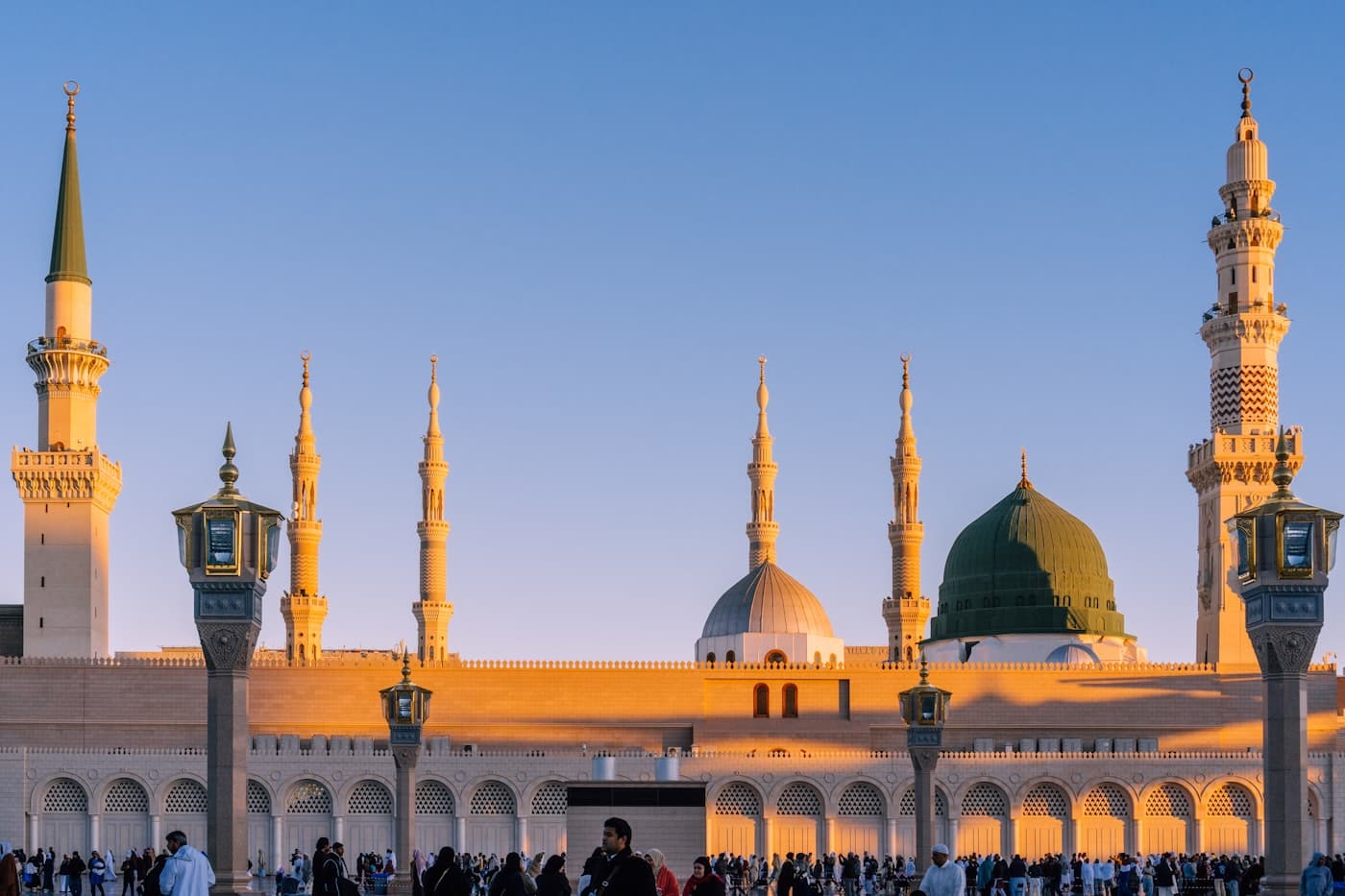
Once your Umrah is complete you are free of ihram and can worship at your own pace: additional voluntary tawaf, prayers in the Haram, long stretches of quiet dua. Most US pilgrims also travel on to Madinah to pray in the Prophet's Mosque and send salawat at the Rawdah, which now requires a Nusuk permit booked in advance.
Move gently through the crowds. Be patient, be kind, and remember that good character toward your fellow pilgrims is part of the worship rather than something separate from it. The days after your Umrah, spent unhurried in the two holiest cities, are often what people remember most fondly of the whole trip.
Frequently asked questions
The rites themselves (tawaf, sa'i, and cutting the hair) can be completed in a few hours in normal conditions, though heavy crowds can stretch that considerably. The trip is another matter. Most US pilgrims spend 7-14 days in total, so they can worship at length and visit Madinah as well.
No. Touching or kissing the Black Stone is a sunnah when possible, but pointing toward it from a distance while saying the takbir is fully valid. Never push or harm others to reach it. Patience and safety come first.
The miqat may be crossed while in the air, so many pilgrims enter ihram before boarding, during the layover, or on the aircraft before crossing the boundary. Confirm the timing with your group so you are not caught unprepared.
Yes. Visiting the Rawdah in the Prophet's Mosque now requires a permit booked through the Nusuk platform. Book your slot in advance, as availability is limited and demand is high.
Minor errors are common for first-timers and often easily corrected. Stay calm, ask your group leader or a knowledgeable person nearby, and for anything involving a ruling, consult a scholar. Sincerity and effort matter greatly.
Ready to plan your journey?
Tell us your dates and a US-based Umrah & Hajj specialist will put a free quote together for you. No obligation.