
Ramadan's Last Ten Nights in Makkah: What They're Really Like
If you've been saving for the last ten nights, you've probably pictured them already: the Kaaba lit up at midnight, the imam's voice carrying across the marble. That part is real. What the picture leaves out is how the nights are run. There are two night prayers, not one. On the biggest nights the mosque can be full from early in the day, and nobody can promise you a place in itikaf when you book. This guide is for someone flying from the United States who would rather know how it works before landing.
Key takeaways
- At both mosques the last ten nights have two night prayers: taraweeh after Isha, then tahajjud later in the night.
- On the busiest nights the Grand Mosque can be full from early morning, as it was before the 29th night in 2024. If a place inside matters, go in early and stay.
- Registration for itikaf opens during Ramadan itself (on 3 Ramadan last year), so nobody can promise you an itikaf place when you book.
- If your Umrah is still to do, aim for the late morning. In 2026 the Ministry's readings from the first two weeks of Ramadan put 8 am to 3 pm as the lightest hours.
Why these ten nights, and why nobody can tell you which one
The Prophet ﷺ said to search for Laylat al-Qadr in the odd nights of the last ten days of Ramadan (Bukhari 2017). The Quran calls it better than a thousand months (97:3). Aisha said that when the last ten began he tightened his waist wrapper, prayed through the night and kept his family awake to pray (Bukhari 2024).
Which night it is has never been settled. Ubayy ibn Ka'b swore it was the 27th (Muslim 762). Another narration points to the last seven nights (Bukhari 2015). Al-Shafi'i is reported to have thought the 21st most likely, and al-Nawawi held that it moves around within the ten. Scholars still differ. We won't choose between them, and you don't need to.
Each night begins at sunset on the evening before its date. The evenings for 2027 are in our guide to Ramadan dates in the USA.
One dua worth learning before you fly
Aisha asked the Prophet ﷺ what she should say if she knew which night it was. He taught her: Allahumma innaka 'afuwwun tuhibbul 'afwa fa'fu 'anni. O Allah, You pardon and You love to pardon, so pardon me (Tirmidhi 3513).
What a night in the Haram actually looks like
The fast breaks at Maghrib, wherever you happen to be sitting. Isha follows, then taraweeh. In the last ten nights there's a second prayer later on, tahajjud, which you'll also hear called qiyam. In 2025 the authority that runs the two mosques published a rota of imams for it, covering every night from the 21st to the 30th.
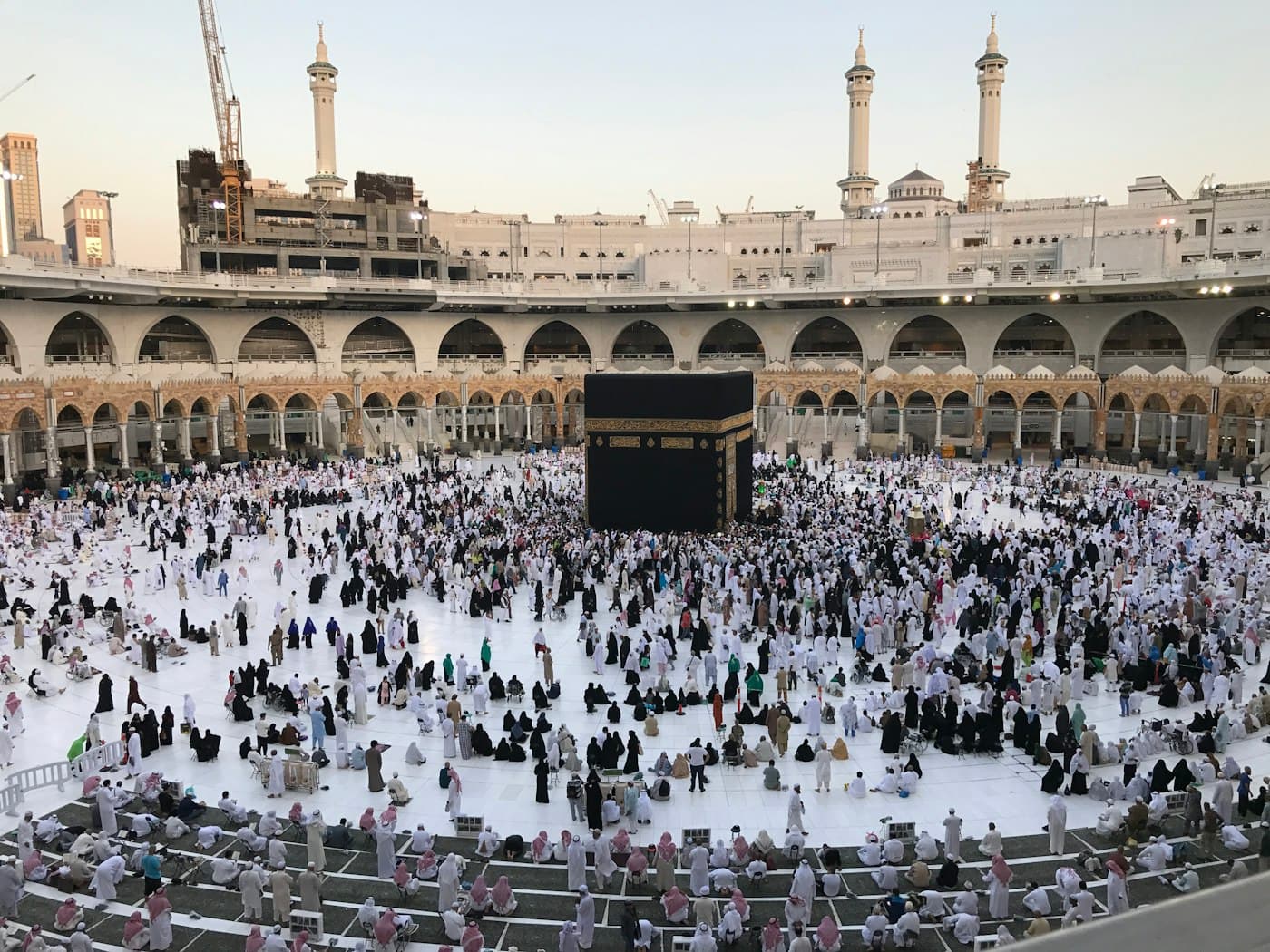
Over the month the recitation works through the whole Quran. In 2023 and 2024 it was completed on the 29th night. In 2024 the Saudi Press Agency put the crowd at the Grand Mosque that night at more than 2.5 million, and said the mosque had been full since early morning.
The crowd builds as the month goes on. In Ramadan 1447 the authority counted about 23.8 million prayer entries at the Grand Mosque in the first ten days, and nearly 34 million in the ten after. Those are entries, not people, but the direction is plain. In 2025 its chief executive said the 26th day and the night of the 27th had set a record.
Many of the people there live in Saudi Arabia. In the first three months of 2025, 8.7 million of the 15.2 million Umrah pilgrims counted came from inside the country, and their numbers peaked in March, which was Ramadan that year.
How early people go, and why we won't give you a time
Everyone asks, and the honest answer is that it depends on the night. Before the 29th night in 2024 the mosque was full from early morning. That's the far end of what can happen, and we'd rather say so plainly than print a time we can't stand behind.
Routes in and out are managed in these ten days. In 2025 the authority named King Abdulaziz Gate (1), King Fahd Gate (79) and King Abdullah Gate (100) as the key gates, with the first-floor mataf reached over the Shubaika and Ajyad bridges and the Al-Arqam bridge. Treat that as an example, not a map. The 2025 plan was reported on 22 March, after the last ten days had begun, so the 1448 version may not be out until you're there.
If being inside matters to you on a particular night, the surest way is to be inside already. Go in for an earlier prayer, take water and any medicine you need, and stay.
Ask on the day
Ask your guide each afternoon how full the mosque was the night before and which entrances were moving. That's fresher than anything we could write months ahead.
If you can't get in
Not getting a place near the Kaaba on these nights isn't a failure on anyone's part. When the indoor prayer areas are full, worshippers are sent to the prayer area of the Third Expansion and to the outer courtyards, as the head of the crowd department described in 2023. In 2026 colour-coded screens tracked how crowded each area was in real time and pointed people to emptier ones.
In 2025 the Ministry of Hajj and Umrah went further. It encouraged people to pray their daily prayers at other mosques around Makkah, and to perform Umrah only once during the last ten days.
For a group, the bigger worry is losing each other. Before you leave the hotel, agree a meeting point by gate number and what happens if someone can't reach it. Don't count on phones to sort it out.
Itikaf, and why you can't book it with your trip
Itikaf means staying in the mosque to worship. The Prophet ﷺ kept it in the last ten days of Ramadan until he died (Bukhari 2026). At the two mosques it now runs as an official programme, with a permit.
The conditions have looked much the same in recent years. You must be at least 18, agree to the authority's rules and start at a set time on the 20th of Ramadan. Itikaf is allowed only in the areas set aside for it, and at the Prophet's Mosque men and women have separate ones. Places are limited: nearly 2,500 at the Grand Mosque in 2023, and 4,700 at the Prophet's Mosque in 2024.
Registration opens during Ramadan itself (on 3 Ramadan last year), so nobody can promise you an itikaf place when you book. In 1447 you applied on the authority's online portal and picked one of the two mosques, not both. Applications were weighed against the space available, and the people chosen were told by text message. Citizens and residents could sign in with Nafath, the Saudi national login, and others created an account. None of the 1447 reports we read said whether visitors on an Umrah visa could apply, and we won't guess.
At the Prophet's Mosque, people in itikaf have been asked to eat any food they bring outside the mosque. The mosque has provided:
- Iftar and suhoor meals, and hot and cold drinks
- Lockers on the north side for spare mats and clothes
- Lectures in several languages
- Medical care, and a wristband to get into the itikaf area
A full itikaf doesn't fit a split trip
The official itikaf runs from the 20th to the end of the month, in one mosque. If Ramadan starts on 8 February as calculated, the 20th is 27 February, the day after our last-ten-nights departure leaves the United States, and that trip spends five nights in each city. If a full itikaf is why you're going, tell us before you book, because it needs a different itinerary, not a different room.
Your Umrah in the last ten days: pick the hour
If you arrive with your Umrah still to do, the hour you choose makes a real difference.
In March 2026, as the last ten days approached, the Ministry of Hajj and Umrah published crowd readings from the first two weeks of Ramadan and asked pilgrims to avoid the peaks. The busiest hours were 4 pm to 10 pm and 5 am to 8 am. From 11 pm to 4 am it was moderate, and 8 am to 3 pm was usually the lightest. That isn't the usual pattern: the authority's general advice, published in August 2026, counts 10 pm to 4 am among the quiet hours.
So in Ramadan the late morning is the better bet, even though doing it while fasting feels backwards.
Madinah, and which odd nights you'll spend where
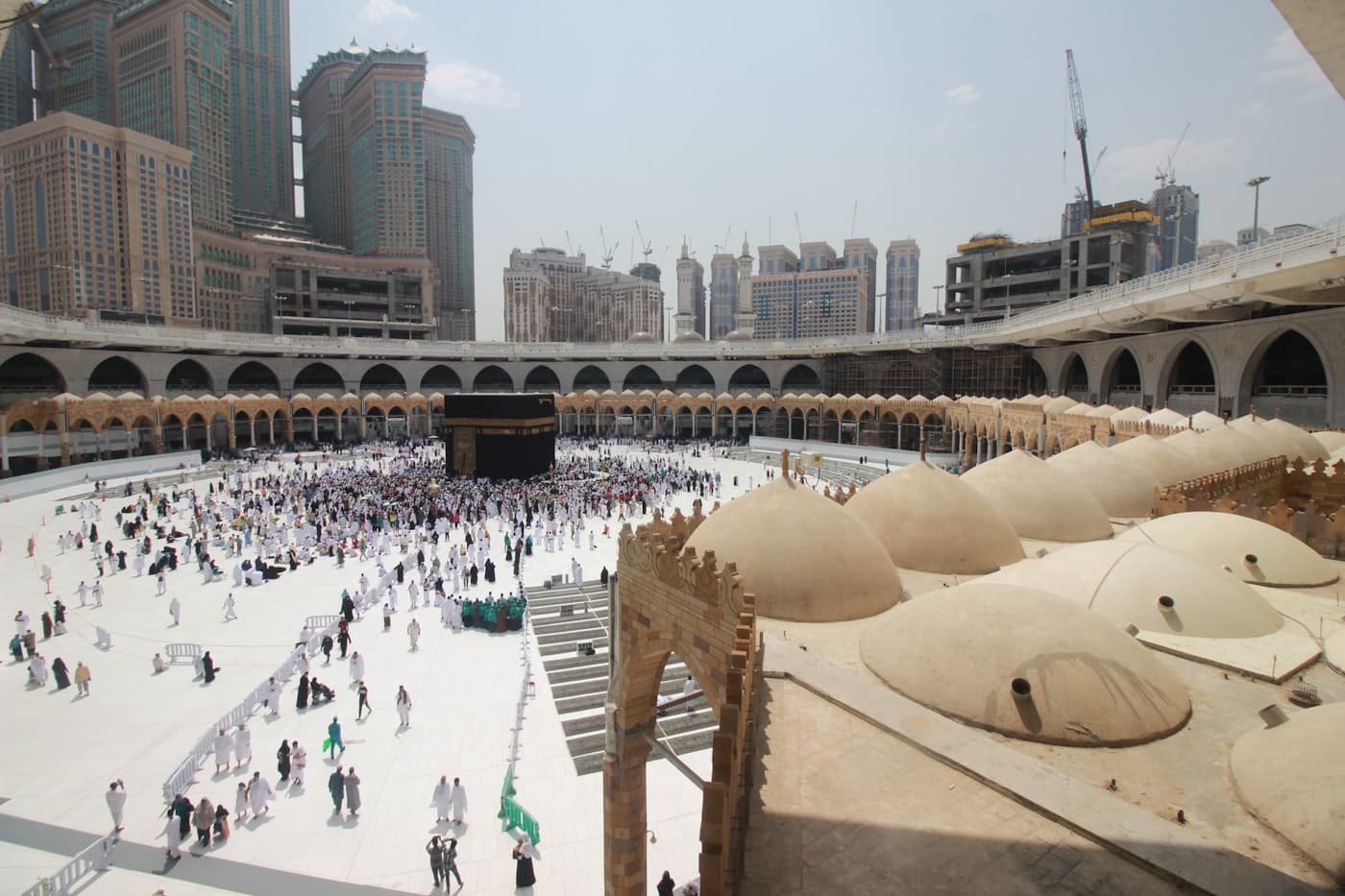
Madinah keeps the same rhythm, taraweeh and then tahajjud with the imams taking turns, but the crowd is smaller. In the first ten days of Ramadan 1447 the authority counted about 10.8 million prayer entries at the Prophet's Mosque, less than half the 23.8 million at the Grand Mosque. More than 9 million free iftar meals were handed out in the mosque and its courtyards that Ramadan.
On a trip split five nights and five, the order of the cities decides where you spend each odd night. Five nights in a row can hold three of the five at most. If the 27th matters most to you, ask which city you'll be in that night before you pay.
The distance from your hotel matters more on these nights, because going back between prayers can cost you your place. On our last-ten-nights departure:
- Makkah: 5-7 minutes by shuttle, or about 15 minutes' walk from the Haram.
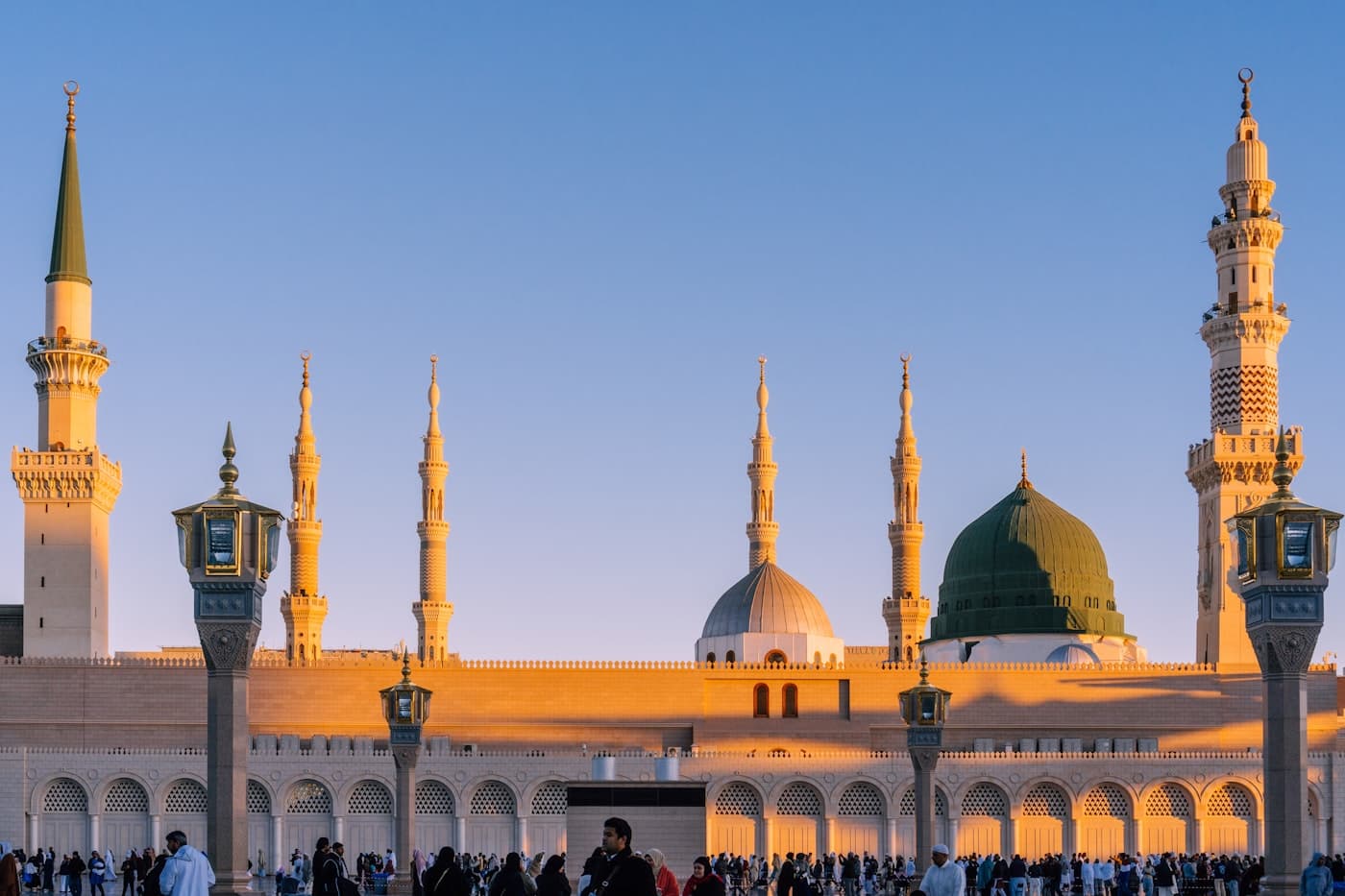
- Madinah: About 3 minutes' walk to Masjid an-Nabawi.
Food, sleep and ten nights in a row
The iftar handed out inside the Grand Mosque is light. In 2024 the authority told people sponsoring it that the meal had to be dry: dates without stones, a cake, a pastry and juice. Treat it as breaking the fast, then plan a proper meal later and suhoor before Fajr.
Sleep is harder. Two night prayers, then suhoor, then Fajr leave a short night, and you'll have ten of them while fasting. Sleep in two blocks and guard them like a flight time. A day that holds up looks something like this.
- 1
Sleep after Fajr
Your main sleep. Darken the room and plan nothing before late morning.
- 2
Late morning: Umrah or tawaf
The lightest hours in the Ministry's 2026 Ramadan readings.
- 3
Afternoon: rest, then decide about tonight
If tonight is one to spend inside, go in for an earlier prayer and stay. If not, sleep a little before Maghrib.
- 4
Maghrib, Isha and taraweeh
Break the fast where you are, then pray.
- 5
Eat a real meal
Between taraweeh and the late prayer, or after it. The iftar pack won't carry you through the night.
- 6
Tahajjud, suhoor, Fajr
If you can't manage all of it every night, protect the sleep after Fajr and let something else give.
Before you book this departure
If you take medicine at set times, or have diabetes or another condition that fasting affects, talk to your doctor about ten days of fasting on broken sleep before you book.
Eid morning
The last-ten-nights departure comes home on what is expected to be Eid day itself. Ask what time the flight leaves before you book, because that decides whether you pray Eid in the mosque or spend the morning on the way to the airport. Neither is wrong. It's better to know which one you're buying.
Frequently asked questions
Nobody can tell you in advance. The Prophet ﷺ said to search for it in the odd nights of the last ten, and scholars have differed for centuries over which night it is and whether it moves from year to year. The 2027 evenings are in our guide to Ramadan dates in the USA.
No. Registration opens during Ramadan itself, on the online portal of the authority that runs the two mosques, and places are given out against the space set aside. Nobody can promise you one when you book. If itikaf matters to you, tell us before you book.
Tahajjud is a voluntary prayer, and ten nights in a row, fasting, after a flight from the United States, is a lot. Pace yourself so you have something left for the nights that matter most to you. Jordan's official fatwa department notes that worship on any night of Ramadan is rewarded, whether or not it turns out to be the night.
Ready to plan your journey?
Tell us your dates and a US-based Umrah & Hajj specialist will put a free quote together for you. No obligation.