
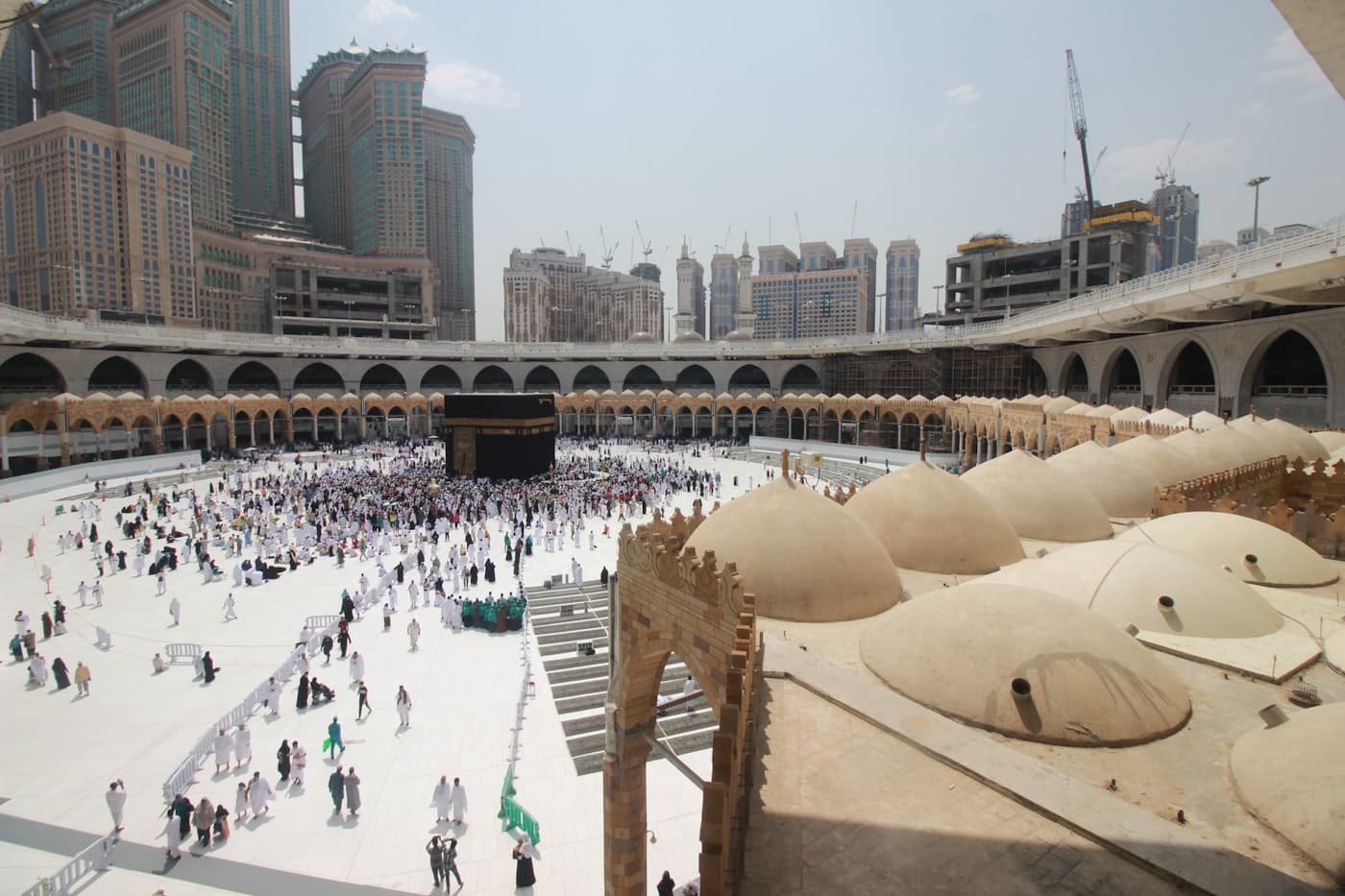
Umrah in Rajab and Shaban: What the Months Mean, and How Busy They Really Are
You'll often hear two things about the months before Ramadan. One is that an Umrah in Rajab carries a special reward. The other is that the Haram is quiet then. The first is a question scholars have answered differently for centuries, and we'll set out what each side relies on without pretending to settle it. The second doesn't survive Saudi Arabia's own statistics. In both 2024 and 2025, the months Rajab and Shaban fell in were among the busiest of the year for pilgrims arriving from abroad.
Key takeaways
- Rajab 1448 runs from 10 December 2026 to 8 January 2027 on the Umm al-Qura calendar, and Shaban from 9 January to 7 February.
- Rajab is one of the four sacred months. Shaban isn't, but it's the month the Prophet ﷺ fasted in most after Ramadan.
- Ibn Umar said the Prophet ﷺ made one of his four Umrahs in Rajab. Aisha said he never did, and scholars have weighed the two accounts differently.
- Scholars differ on whether Rajab is a reason in itself to pick your dates. None of the views below rejects an Umrah made in Rajab.
- These aren't quiet months. January and February 2025, almost exactly Rajab and Shaban 1446, were the two busiest months for pilgrims from abroad in four years of official Saudi figures.
- Our December departure, 20-29 December, sits in the middle of Rajab. January dates from the 9th onward are in Shaban.
Rajab, the sacred month that stands alone
The Quran says Allah fixed the year at twelve months, that four of them are sacred, and that people should not wrong themselves in them (9:36). A narration in al-Bukhari names the four. Dhul Qadah, Dhul Hijjah and Muharram come one after another. Rajab stands on its own between Jumada al-Akhirah and Shaban, and the Prophet ﷺ called it the Rajab of Mudar. Ibn Kathir explains the name: the tribe of Mudar kept Rajab in that place, where the tribe of Rabi'ah had put it after Shaban.
Why set one month apart? Ibn Kathir's commentary gives the classical answer. The other three protected the weeks before Hajj, Hajj itself and the journey home. Rajab, in the middle of the year, was made sacred so that people from the far ends of Arabia could come for Umrah, visit the House and get back safely. So the link he draws between this month and Umrah is a practical one: safe roads.
The same commentary records Ibn Abbas saying that in the sacred months sins weigh heavier and good deeds are multiplied, and Qatadah saying that wrongdoing in them is graver than at other times. On a pilgrimage that has a very ordinary meaning: the push at a crowded gate, or the sharp word over a place in the row. Ibn Kathir says the same of sin in the sacred city itself, so a pilgrim in Makkah during Rajab is standing inside both.
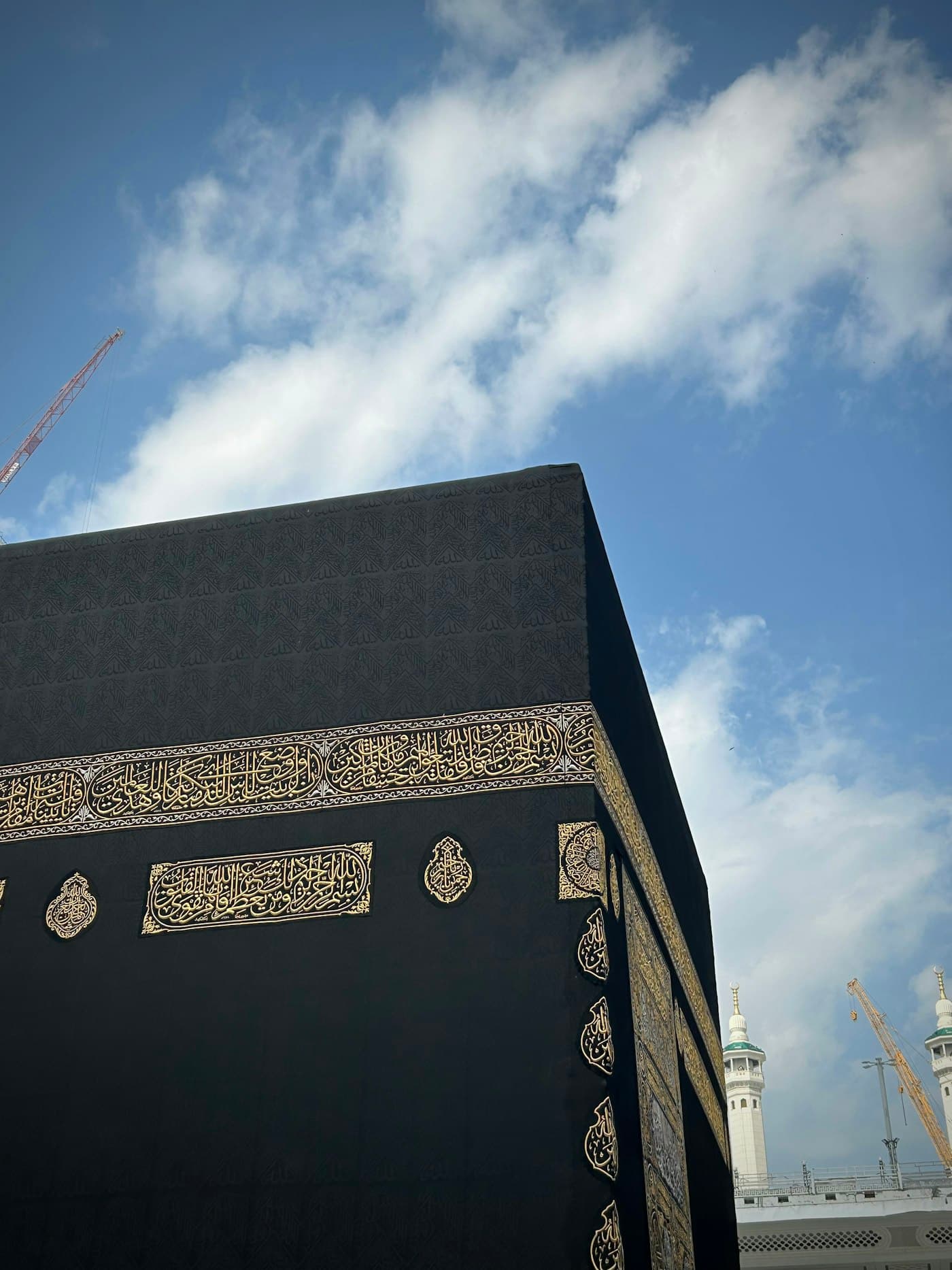
Did the Prophet ﷺ make an Umrah in Rajab?
Two Companions remembered it differently, and the exchange is recorded in both al-Bukhari and Muslim. Mujahid and Urwa ibn al-Zubayr found Abdullah ibn Umar sitting in the mosque near Aisha's room and asked him how many Umrahs the Prophet ﷺ had made. Four, he said, and one of them in Rajab. They didn't like to contradict him. Then they heard Aisha inside, cleaning her teeth with a siwak, and Urwa called out and repeated what Ibn Umar had said. Her answer was gentle and completely firm. May Allah have mercy on him, she said. The Prophet ﷺ never made an Umrah without Ibn Umar being there, and he never made one in Rajab.
Anas ibn Malik gives the list in other narrations in al-Bukhari. The first Umrah was at al-Hudaybiyah, when the pagans turned him back. The second came the following year, under the peace agreement. The third began at al-Ji'ranah, where he shared out the spoils of Hunayn. All three were in Dhul Qadah. The fourth was the one he joined to his Hajj.
Scholars have weighed the two accounts differently, and Ibn Baz answered the question both ways. In one answer he called Aisha's account the preserved one and said Ibn Umar had misremembered, as anyone can. In another he applied the rule that a trustworthy narrator who affirms something is preferred over one who denies it, and said the Prophet ﷺ may have made an Umrah in Rajab without Aisha knowing. The rest of the case for Rajab rests on what some Companions did after him.
Is there extra reward in a Rajab Umrah? Where scholars differ
Answers differ here, and we'll leave the ruling to your scholar.
One view holds that Rajab has a link with Umrah that it has with no other act of worship. Ibn Baz cited Ibn Rajab's report that Umar ibn al-Khattab favoured Umrah in Rajab and that Aisha and Ibn Umar made it then, and concluded that it isn't an innovation. In another answer he said Rajab has nothing special of its own except this, and there's no harm in making Umrah in it. He also called the matter broad: an Umrah in Rajab, in Shaban or at any other time is good, and the best is in Ramadan.
Among Shia scholars, the rulings published by the office of Ayatollah al-Sistani say an Umrah may be made in any month of the year, preferably in Rajab.
Another view holds that the month gives no reason of its own. An answer on IslamQA, quoting Ibn al-Attar, a student of al-Nawawi, and Shaykh Muhammad ibn Ibrahim, says no report from the Prophet ﷺ gives Rajab a special merit for Umrah, and that making a custom of it has no basis. It adds that if Rajab simply suits you, and you go without believing the month adds reward, there's nothing wrong with that.
None of these tells you to avoid the month. They part over whether the month itself adds anything, and if that matters to you, ask a scholar you trust before you book.
There is a sound narration about timing, but it's about the month after these two. In al-Bukhari, the Prophet ﷺ told a woman who had missed Hajj with him to make Umrah when Ramadan came, because an Umrah in Ramadan is equal in reward to a Hajj.
And fasting in Rajab?
Scholars differ here too. Jordan's official fatwa department says most Hanafi, Maliki and Shafi'i scholars, and some Hanbalis, hold that fasting in Rajab is recommended, as it is in the other sacred months. A view that later became well known in the Hanbali school dislikes singling Rajab out for it. Ibn Baz said fasting the whole of Rajab isn't prescribed.
Shaban, the month people overlook
Shaban isn't one of the sacred months, but it carries weight of its own. Aisha said she never saw the Prophet ﷺ fast a complete month except Ramadan, and never saw him fast more in any month than in Shaban. That's in al-Bukhari.
Usamah ibn Zayd once put the same observation to him. He answered that Shaban is a month people pay little attention to, between Rajab and Ramadan, and that deeds are raised to the Lord of the worlds in it, so he liked his deeds to be raised while he was fasting. An-Nasa'i records this, and the Darussalam edition grades it hasan. Egypt's Dar al-Ifta draws the lesson from both narrations: voluntary fasting in Shaban carries extra reward, because the month is close to Ramadan and because people neglect it.
The month people neglected now brings some of the year's largest numbers of pilgrims from abroad, as the figures below show. If you're fasting on a Shaban Umrah, a tawaf in a full mataf with sa'i straight after is harder than it sounds at home. Don't leave it for the hour before iftar.
27 Rajab and the middle of Shaban
Two nights bring questions every year, and in 1448 both fall in January.
Many Muslims mark the Isra and Mi'raj on the night of 27 Rajab. On the Umm al-Qura calendar the 27th is Tuesday 5 January 2027, and because a night in the Hijri calendar begins at sunset, the night of the 27th starts on the evening of Monday 4 January. The 15th of Shaban is Saturday 23 January, so the night of mid-Shaban runs from sunset on Friday 22 January.
Scholars disagree about both. Ibn Baz held that no authentic report fixes the Isra and Mi'raj in Rajab or any other month, and that celebrating either night has no basis. Egypt's Dar al-Ifta calls the night of mid-Shaban blessed, on the strength of several narrations that support one another, and says marking it is lawful so long as nobody treats it as an obligation. It takes the same view of occasions such as the Isra and Mi'raj, provided nothing unlawful is involved.
The best-known narration about mid-Shaban says Allah looks down on that night and forgives everyone except the idolater and the one who harbours enmity. The Darussalam edition grades the version in Sunan Ibn Majah weak. Dar al-Ifta cites another, from Mu'adh ibn Jabal, which it says Ibn Hibban judged authentic.
We don't take a side. If a particular night matters to you, tell us when you enquire, and check the date with your own mosque too.
How busy Rajab and Shaban really are
You'll still see these described as the quiet months before Ramadan. Saudi Arabia's General Authority for Statistics counts the pilgrims who arrive from abroad each month, and DataSaudi, the Ministry of Economy and Planning's data portal, publishes the series. It doesn't back the old advice.
In 2025 the months lined up almost exactly with the calendar. Rajab 1446 ran from 1 to 30 January, and Shaban from 31 January to 28 February. January counted 2,390,794 pilgrims from abroad and February 2,207,311. Those were the two highest months in the whole series, which runs from January 2022 to December 2025.
The year before, Rajab 1445 began on 13 January 2024 and Shaban on 11 February, so January and February were mostly those two months. February was the third-busiest month of 2024 and January the fourth, ahead of every month from April to November:
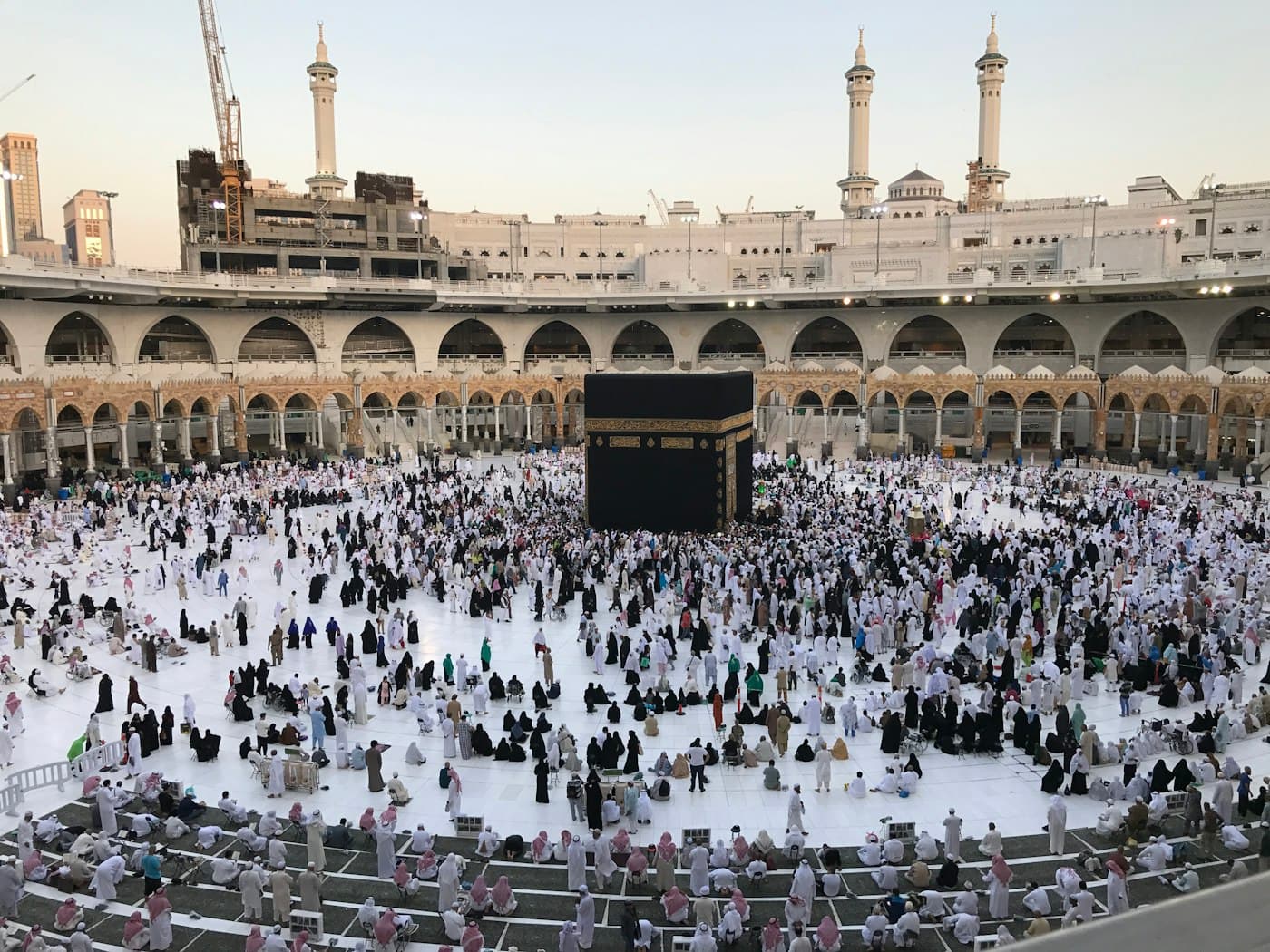
- January 2024: 1,785,585 pilgrims from abroad
- February 2024: 1,915,498
- September 2024: 1,267,413
- October 2024: 1,590,767
What these figures don't tell you
They count pilgrims from abroad only. Pilgrims from inside Saudi Arabia are counted in a separate table, and that one climbs steeply in Ramadan, so none of this means Rajab is fuller than Ramadan. The figures also can't separate the months from the season, since in these years Rajab and Shaban fell in January and February. And the yearly total has grown every year of the series, from about 8.4 million in 2022 to about 18 million in 2025, which is part of why 2025 sits at the top. The 2026 monthly figures weren't on DataSaudi when we checked in October 2026. We'll update this page when they are.
The 1448 dates, and where our departures fall
These dates come from the Umm al-Qura calendar, the official Hijri calendar of Saudi Arabia, published online by the King Abdulaziz City for Science and Technology. The Hijri year is about eleven days shorter than the Gregorian one, so the months move earlier each year. Rajab 1449 begins on Monday 29 November 2027.
The calendar's date isn't always the one Saudi Arabia keeps. Its Supreme Court issues its own decisions on when some months begin. It confirmed 1 Shaban in January 2026 on the calendar's day, but its Dhul Qadah that April began a day after the calendar's. For Ramadan, the court asks people to look for the new moon on the evening of 29 Shaban and report what they see.
Both months sit well inside this season's Umrah visa window. Our visa guide has the dates that close it.
- 1 Rajab 1448: Thursday 10 December 2026
- Our December departure, 20-29 December 2026: 11 to 20 Rajab
- 27 Rajab: Tuesday 5 January 2027
- 1 Shaban: Saturday 9 January 2027
- 15 Shaban: Saturday 23 January 2027
- 1 Ramadan on the calendar: Monday 8 February 2027, subject to the moon sighting
If you want to travel in one of these months
The December trip is eight nights, four at Rotana Jabal Omar Makkah and four at Pullman Zamzam Madinah, from $2,690 per person on quad occupancy with flights included. The January trip is seven nights from $2,190 on the same basis. We haven't published its dates yet, and anything from 9 January falls in Shaban. Either way, book it the way you'd book a busy month, because that's what it is.
Frequently asked questions
Scholars differ. Ibn Umar said the Prophet ﷺ made one of his Umrahs in Rajab and Aisha said he never did, in a narration recorded by both al-Bukhari and Muslim. Umar ibn al-Khattab favoured Umrah in Rajab, and Ibn Baz said it isn't an innovation. The rulings of Ayatollah al-Sistani name Rajab as the preferred month. An answer on IslamQA says no report gives the month special merit for Umrah. None of these views rejects the Umrah itself.
On the Umm al-Qura calendar used in Saudi Arabia, Rajab starts on Thursday 10 December 2026 and Shaban on Saturday 9 January 2027. Shaban runs to Sunday 7 February, and the calendar puts 1 Ramadan on Monday 8 February, subject to the moon sighting. If 27 Rajab or mid-Shaban matters to you, check the date with your own mosque.
Not for pilgrims from abroad. In 2025, when Rajab and Shaban fell in January and February, those were the two busiest months for international pilgrims in Saudi figures going back to 2022. Pilgrims from inside the Kingdom come in far larger numbers in Ramadan, so Ramadan is another scale altogether, but the months before it aren't the lull they're often described as.
The December departure, 20-29 December 2026, falls on 11 to 20 Rajab, and any January dates from the 9th are in Shaban. They start at $2,690 and $2,190 per person on quad occupancy, flights included.
Ready to plan your journey?
Tell us your dates and a US-based Umrah & Hajj specialist will put a free quote together for you. No obligation.